Category: Car Care Tips

  • How to Remove Scratches From a Car Paint (DIY or Professional Guide)

    How to Remove Scratches From a Car Paint (DIY or Professional Guide)

    A small scratch on your car can turn into a costly repaint if you fix it the wrong way.

    The good news is that most damage can be fixed without repainting. If you know how to remove car scratches correctly, you can safely restore or improve the surface and prevent further problems.

    In this guide, you’ll learn how to:

    • Identify the type of scratch on your car
    • Choose the right method to fix car paint scratches
    • Know when DIY works and when to get professional car scratch repair
    • Avoid common mistakes that can further damage your paint
    • Most scratches can be fixed without repainting if they are only in the clear coat
    • Always check the scratch depth first before attempting any repair
    • DIY works for light damage, but deeper scratches need professional repair
    • Removing too much clear coat can cause permanent damage
      When unsure, assess the scratch first to avoid costly mistakes

    Can You Remove Car Scratches Without Repainting?

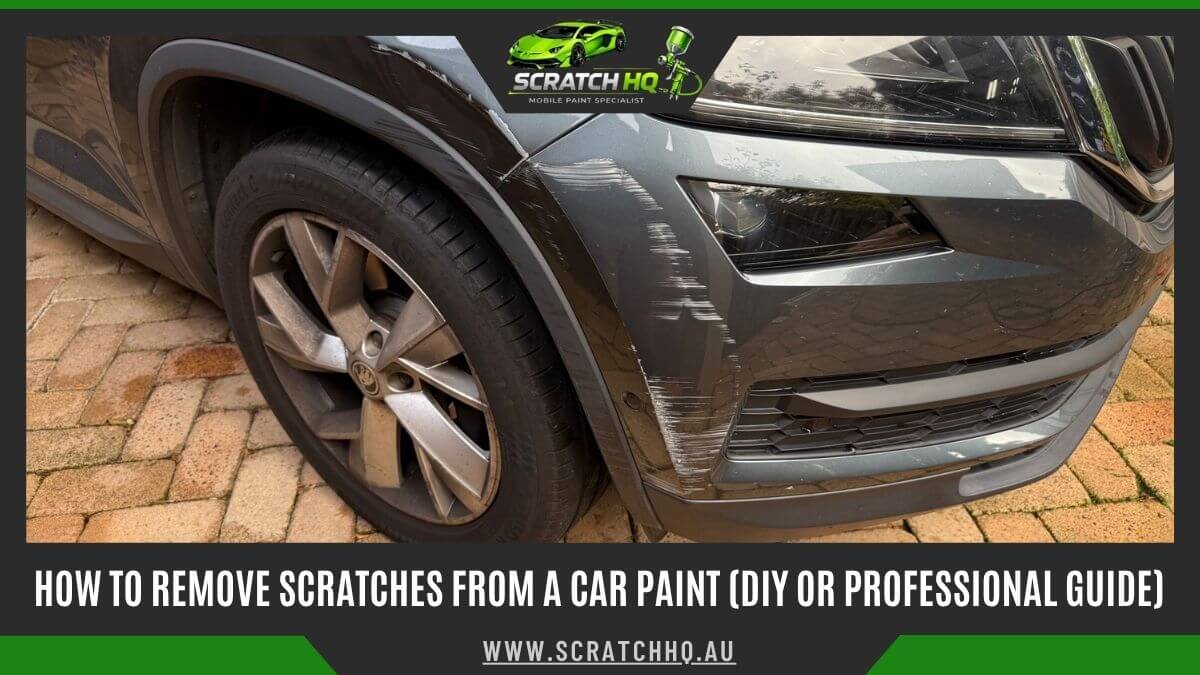
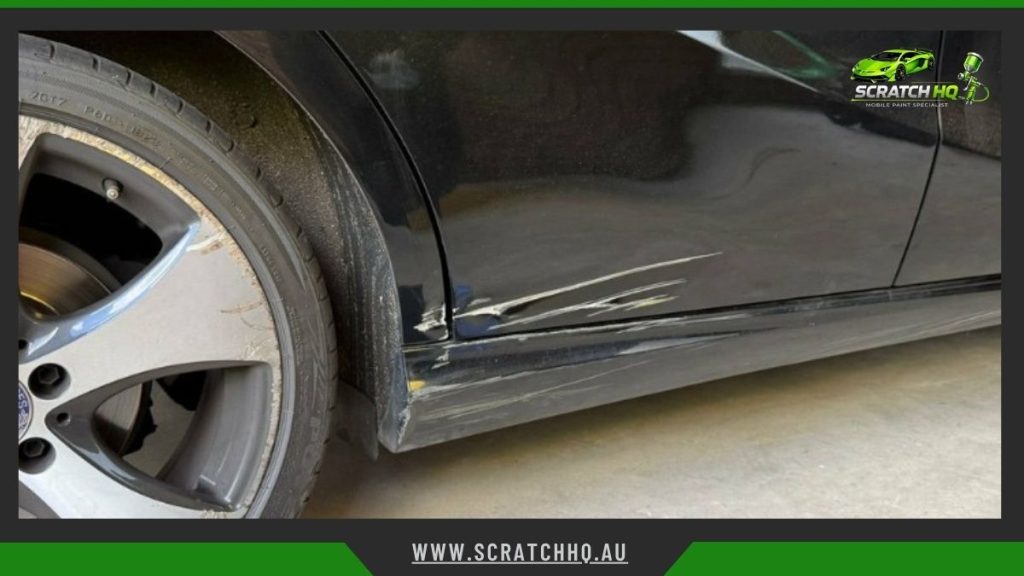
    scratched car paint surface

    Yes, in many cases.

    If the scratch is only in the clear coat, it can usually be removed through polishing. If it goes deeper, it may still be improved, but not completely removed.

    Here is a quick breakdown:

    Light scratches — fully removable

    Paint transfer — easy to remove

    Medium scratches — mostly improved

    Deep scratches — may need touch-up or repainting

    If the scratch disappears when wet, it is usually fixable.

    What Type of Car Scratch Do You Have?

    Before you try to remove car scratches, you need to identify the type of damage. Each type requires a different method, and using the wrong approach can make the scratch worse.

    Here’s a simple breakdown of different types of car scratches and how to fix them:

    Clear Coat Scratch

    Light marks, fades when wet

    Yes

    Polish or buff

    Paint transfer

    Looks like a scratch but feels smooth

    Yes

    Clean and polish

    Medium scratch

    Visible, may catch fingernail

    Mostly

    Machine polishing

    Deep scratch

    Deep line, shows primer or metal

    Partial

    Touch-up or repaint

    Most car scratches fall into two categories: clear coat scratches or paint transfer, which are the easiest to remove with basic DIY methods. Deeper scratches may still be improved, but they usually require more advanced car scratch repair techniques.

    The Fingernail Test (Quick Way to Check Depth)

    Run your fingernail across the scratch.

    Does not catch — surface level, easy to fix

    Slight catch — can be improved with polishing

    Deep catch — likely needs professional repair

    This simple test helps you avoid using the wrong method.

    DIY vs Professional Car Scratch Repair: What Should You Choose?

    Choosing the right approach depends on how deep the scratch is. The goal is to fix the damage without removing more clear coat than necessary.

    When DIY Scratch Removal Works

    • Scratches that do not catch your fingernail
    • Paint transfer
    • Light swirl marks
    • Small, isolated scratches

    When to Go for Professional Repair

    • Scratches that catch your fingernail
    • Chipped or missing paint
    • Multiple scratches across one panel
    • Damage near edges or curves

    These situations often require controlled tools and proper blending.

    What DIY Cannot Fix

    DIY methods can only help with surface-level scratches and paint transfer. Any scratch exposing primer, metal, or showing rust should be handled by a professional.

    They will not fix:

    • Exposed metal or primer
    • Rust
    • Deep grooves
    • Large damaged areas

    These situations require proper repair steps such as sanding, priming, and repainting. Professional providers like Maaco highlight that deeper scratches cannot be corrected through polishing alone.

    Quick Decision Guide

    Does not catch— DIY is safe

    Slight catch— may improve, proceed carefully

    Deep catch— go professional

    If unsure, examine the scratch thoroughly before starting repairs.

    How to Remove Car Scratches Step by Step (Safe DIY Method)

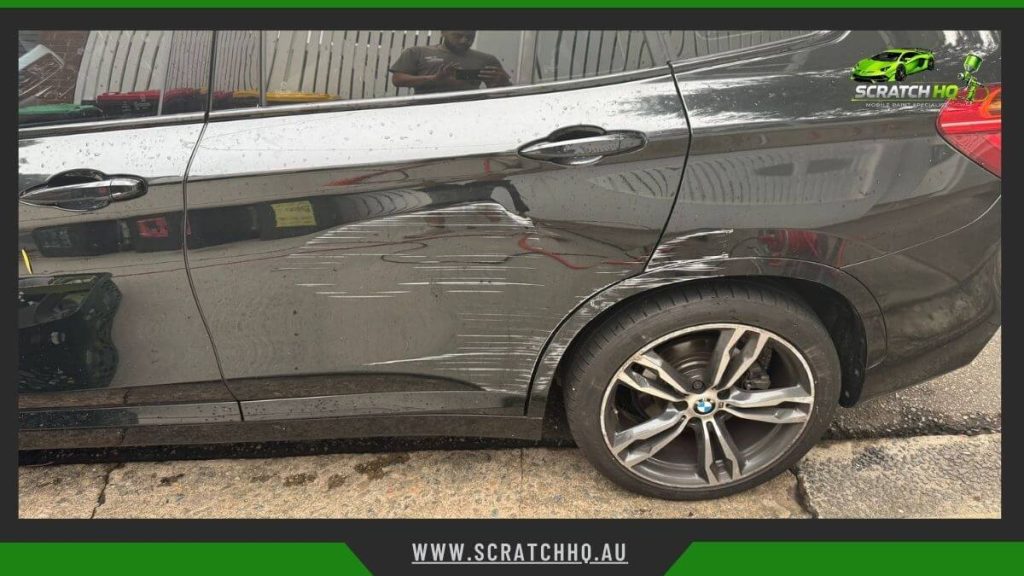
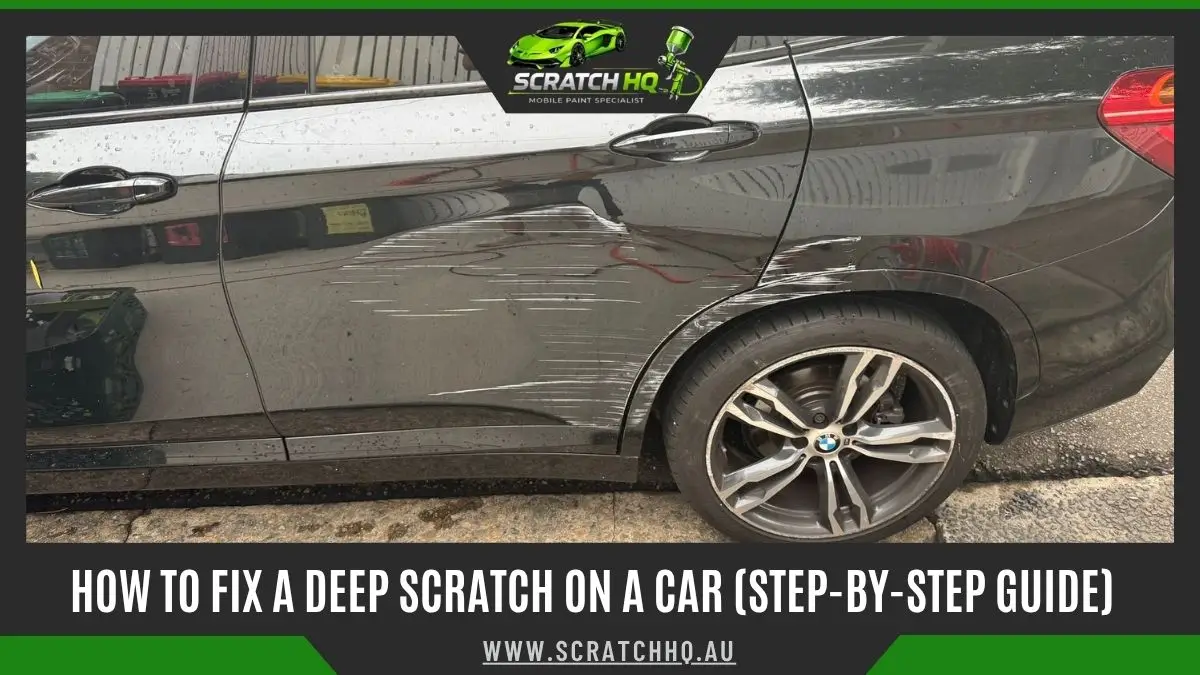
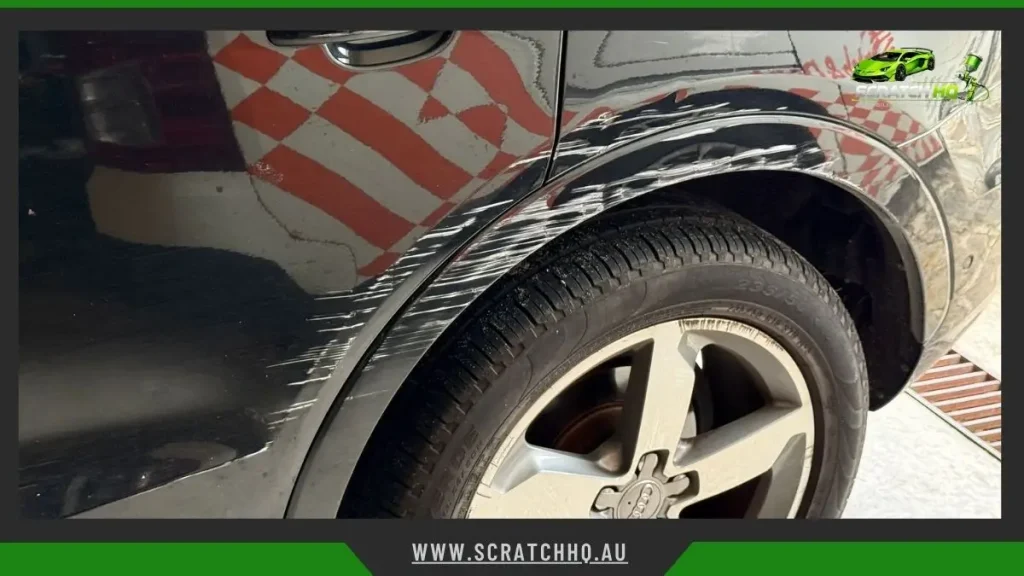
    deep car scratches on paint surface

    If the scratch is shallow, you can improve or remove it at home using a simple polishing process.

    The goal is to gently level the surface so the scratch becomes less visible or disappears.

    What You Need

    Microfiber cloth or applicator pad · Scratch remover or polishing compound · Finishing polish or wax

    Optional: Masking tape · Clean water spray for inspection

    Before you start: Work in a shaded area, make sure the surface is cool to the touch, and use clean materials to avoid adding new marks.

    1

    Clean the area properly

    Wash and dry the surface thoroughly before applying any product. Dirt or debris can cause additional scratches during polishing. A clean surface allows the product to work evenly.

    2

    Apply the compound

    Apply a small amount of scratch remover or compound to your cloth or pad. Work on a small section at a time using light, consistent pressure. Move in controlled circular or back-and-forth motions.

    3

    Work the area gradually

    Focus on even coverage rather than pressure. Repeat light passes instead of pressing harder. Check the surface every few passes. Stop once you see visible improvement.

    4

    Wipe and inspect

    Use a clean microfiber cloth to remove excess product. Look from different angles using natural light. Lightly mist water to check visibility. Repeat only if needed.

    5

    Apply polish or wax

    Finish with a polish or wax to restore gloss, blend the repaired section, and add a protective layer.

    Watch: How to Remove Car Scratches (Step-by-Step)

    Before you try this yourself, it helps to see how the process is actually done.

    Small mistakes, like applying too much pressure, working too long on one spot, or skipping proper prep, can make the scratch worse. Watching a real demonstration gives you a clearer sense of how to apply the product, how much pressure to use, and when to stop.

    In the video, you’ll see:

    • How to clean the surface properly before starting
    • How to apply a compound with controlled movement
    • When to stop polishing to avoid overcorrecting
    • How to finish and protect the area

    This helps you avoid trial-and-error and gives you more control before working on your own car.

    Common Mistakes When Trying to Fix Car Paint Scratches

    These are the most common problems:

    • Using a scratch remover on serious damage
    • Skipping proper cleaning
    • Applying too much pressure
    • Over-polishing one spot
    • Using the wrong product

    How Much Does It Cost to Remove Car Scratches?

    Cost depends on the depth of the scratch, the size of the area, and the method you choose.

    Here’s how to think about it:

    Option 1

    DIY repair

    Lowest cost, but higher risk if done incorrectly

    Option 2

    Mobile repair

    Balanced option — cost, convenience, and results

    Option 3

    Body shop

    Higher cost, best for serious or extensive damage

    What actually affects the price:

    • How deep the scratch is
    • How large is the damaged area
    • Overall paint condition
    • Number of scratches

    In most everyday situations, mobile repair is the most practical choice. It gives you professional results without the higher cost and downtime of a body shop. The key is choosing the method based on the damage, not just the price.

    Mobile Repair vs Body Shop: Which Should You Choose?

    Both have their place.

    Feature

    Mobile Repair

    Body Shop

    Location

    Your home or work

    Workshop

    Time

    1 to 3 hours

    2 to 5 days

    Cost

    Lower

    Higher

    Best For

    Minor to medium damage

    Severe damage

    Mobile repair is faster and more convenient for small areas. Body shops are better for large or complex repairs.

    Does Toothpaste Really Remove Car Scratches?

    Sometimes, but it is not reliable. Toothpaste can act as a mild abrasive. It may improve very light surface marks, but it will not fix deeper scratches. It can also create uneven results if used incorrectly.

    A proper polishing compound is always the better option.

    What Results Can You Expect After Scratch Repair?

    Results depend on how deep the scratch is.

    Scratch Type

    Result After Repair

    Light Scratch

    Fully removed

    Paint Transfer

    Completely gone

    Medium Scratch

    Hard to notice

    Deep Scratch

    Improved but still visible

    The goal is not always perfection. It is to make the damage unnoticeable in normal use.

    Can Scratches Lead to Rust?

    Yes, if the scratch exposes bare metal. Once moisture reaches the metal, rust can begin to form. This can spread and cause more damage over time.

    How to Prevent Car Paint Scratches

    Washing your car the wrong way, using poor materials, or parking carelessly causes more damage over time than major incidents. Small mistakes repeated often wear down your paint.

    Most scratches don’t come from accidents. They come from everyday habits.

    Use Proper Washing Techniques

    Incorrect washing is one of the biggest causes of light scratches.

    Best practices:

    • Rinse the car first to remove loose dirt.
    • Use a clean wash mitt instead of rough sponges.
    • Wash in straight lines, not circles.
    • Rinse your mitt regularly.

    Dragging dirt across the surface is what creates swirl marks.

    Avoid Dirty or Low-Quality Materials

    Your tools can either protect or damage your paint.

    What to avoid:

    • Old or worn-out clothes.
    • Cheap sponges that trap dirt.
    • Towels are not designed for car surfaces.

    Even a slightly dirty cloth can leave fine scratches across the paint.

    Be Mindful When Parking

    Many scratches happen when the car is stationary.

    Simple habits:

    • Park away from crowded areas
    • Avoid tight spaces
    • Leave enough room to open doors safely

    This reduces the risk of contact with other people and vehicles.

    Watch Your Surroundings

    Not all scratches come from other cars.

    Be cautious around:

    • Bushes and tree branches
    • Narrow driveways
    • Walls, fences, or posts

    Repeated light contact can leave visible marks over time.

    Apply Protective Layers

    Protective coatings help reduce direct contact with the paint.

    Options include:

    • Wax for basic protection
    • Sealants for longer durability.
    • Ceramic coatings for added resistance

    These layers help reduce minor surface damage and make cleaning safer.

    Dry the Car Properly

    Drying can also cause scratches if done incorrectly.

    Better approach:

    • Wax for basic protection
    • Sealants for longer durability.
    • Ceramic coatings for added resistance

    Proper drying helps maintain a smooth surface.

    Build Consistent Habits

    Paint condition depends on consistent care.

    Better approach:

    • Clean your car regularly.
    • Replace worn materials
    • Stay aware of how you handle your vehicle.

    You cannot prevent every scratch, but you can reduce most avoidable damage.

    When Is Repainting the Only Option?

    fixed scratched car paint surface

    Repainting is needed when:

    • Metal is exposed
    • Rust has started
    • Damage covers a large area.
      Multiple deep scratches are present.

    In these cases, polishing alone will not fix the problem.

    Send a photo for a free assessment

    Frequently Asked Questions

    Light scratches can be fully removed. Deeper ones can be improved.

    Most mobile repairs take 1 to 3 hours.

    For minor damage, yes. For severe damage, a body shop is better.

    No. Mobile services can fix it at your home or workplace.

  • How to Fix a Deep Scratch on a Car (Step-by-Step Guide)

    How to Fix a Deep Scratch on a Car (Step-by-Step Guide)

    A deep scratch on your car isn’t just a surface issue. Once the damage cuts through the clear coat, it requires proper repair to restore the paint and protect the panel.

    Fixing it properly involves sanding, rebuilding the paint in layers, and sealing the surface so it blends cleanly with the surrounding area. When done right, it not only improves the look but also prevents issues like rust or peeling.

    In this guide, you’ll learn how to assess the damage, fix a deep scratch step by step, and when it’s better to leave it to a professional.

    • Deep scratches require sanding, paint layering, and sealing
    • Always check the depth using the fingernail and color test
    • Apply paint in thin layers and allow proper drying time
    • DIY works for small damage; visible scratches are better handled professionally
    • Exposed metal should be repaired immediately to prevent rust

    Quick Answer: How to Fix a Deep Scratch on a Car

    A deep car scratch goes beyond the clear coat into the paint, primer, or metal. It requires proper repair with sanding, primer (if needed), touch-up paint, and a clear coat.

    Here’s the process:

    1

    Clean the area to remove dirt and debris

    2

    Lightly sand the scratch to smooth the edges

    3

    Apply primer if the scratch reaches primer or metal

    4

    Apply touch-up paint in thin layers, allowing each layer to dry

    5

    Apply a clear coat to seal and protect the surface

    6

    Polish the area to blend it with the surrounding paint

    Types of Car Scratches (Quick Comparison)

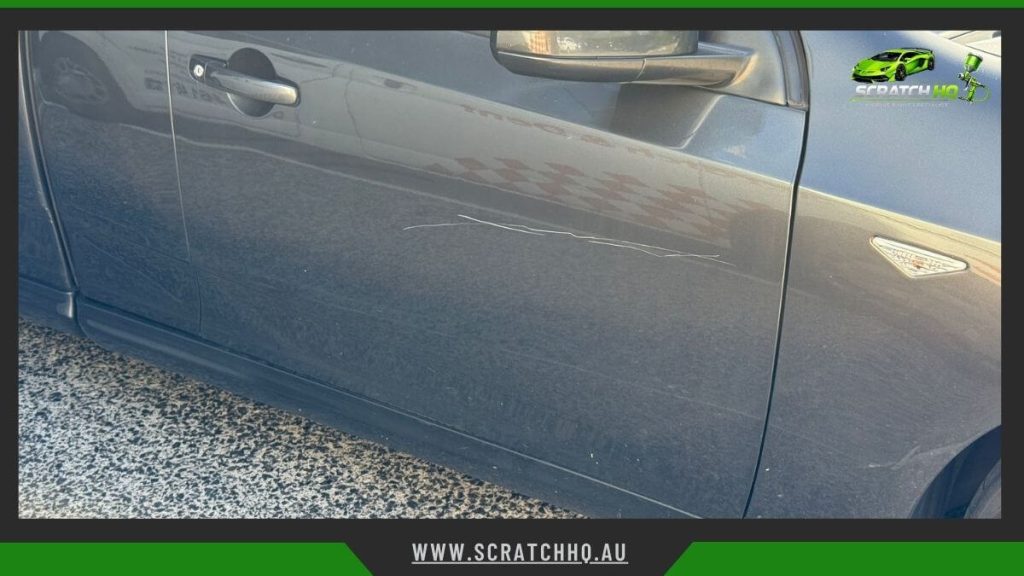
    Car door scratch repair in Sydney by Scratch HQ mobile service

    Not all scratches are the same, and each type requires a different level of repair. Identifying the depth helps you choose the right method and avoid making the damage worse.

    Understanding the difference is important if you’re trying to figure out how to fix car scratches properly.

    surface

    Clear coat only

    Usually light and barely visible. Do not catch your fingernail. Can be removed with polishing.

    Best fix:

    Polish or scratch remover

    Moderate

    Into the paint layer

    May be visible under certain lighting. Slightly noticeable texture. Color is still mostly intact.

    Best fix:

    Light sanding and touch-up paint

    Deep

    Into primer or metal

    Easily felt with your fingernail. May show white, grey, or bare metal. Often uneven and more visible.

    Best fix:

    Full repair with sanding, primer, paint, clear coat.

    Quick Decision Guide

    Surface scratches— polish

    Moderate scratches— touch-up paint

    Deep scratches— full repair

    Why this matters

    Using the wrong method can make the scratch worse or leave visible marks. Knowing the difference helps you fix it properly the first time.

    If you see white, grey, or exposed metal, the scratch is deep. In these cases, using scratch repair services for car paint can help restore your vehicle’s appearance and protection.

    What Counts as a Deep Scratch


    A deep scratch goes beyond the clear coat into the paint, primer, or metal. These cannot be fixed with polishing and require proper repair to restore the surface and prevent further damage.

    Car paint has three main layers:

    Clear coat

    Base coat

    Primer

    Metal

    Once the scratch goes through the clear coat and into primer or metal, the surface must be rebuilt with paint.

    How to Tell If the Scratch Is Deep

    You can identify a deep scratch by checking its depth and appearance.

    • Fingernail test:If your nail catches, it is deep
    • Color check:White or grey indicates primer; silver indicates metal.
    • Surface feel:Deep scratches feel rough and uneven

    If any of these apply, the scratch requires proper repair, not just surface correction.

    Tools and Materials You’ll Need

    Using the right materials is important, but understanding what each one actually does helps you avoid common mistakes and achieve a cleaner result.

    Quick Toolkit Reference (What Each Tool Actually Does)

    Sandpaper (2000–3000 grit)

    Smooth surface and level scratch edges

    Must have

    Using the wrong grit (too rough damages paint)

    Primer

    Helps paint stick and prevents rust

    Conditional

    Skipping it on bare metal

    Touch-up paint

    Restores color

    Must have

    Using the incorrect paint code

    Clear coat

    Seals and protects the paint

    Must have

    Applying too thickly, causing an uneven finish

    Microfiber cloth

    Cleans surface without scratchinga

    Must have

    Using dirty or rough cloth

    Polishing compound

    Restores shine and blends repair

    Must have

    Over-polishing one area

    Masking tape

    Protects the surrounding paint

    Must have

    Not Masking properly

    How to Find Your Car’s Paint Code

    To match the paint correctly, you need your car’s paint code.

    You can find it:

    • Inside the driver-side door frame
    • Under the hood
    • In the owner’s manual

    Use this code when buying paint. Guessing the color often leads to a visible mismatch.

    Step-by-Step: How to Fix a Deep Scratch on a Car

    Fixing a deep scratch requires more than polishing, and in some cases, you may need professional car paint repair to achieve a smooth, consistent finish. 

    Follow these steps carefully:

    1

    Clean and Prepare the Area

    Wash the area with soap and water to remove dirt and debris. Dry it completely, then use masking tape to protect the surrounding paint.

    2

    Smooth the scratch

    Lightly sand the scratch using 2000–3000 grit wet sandpaper. Keep the surface wet while sanding to avoid damaging nearby paint. The goal is to smooth sharp edges so the paint can sit evenly.

    3

    Apply primer (if needed)

    If the scratch reaches primer or bare metal, apply a thin layer of automotive primer. This improves adhesion and prevents rust. Let it dry fully before continuing.

    4

    Apply touch-up paint

    Use your car’s exact paint code to match the color. Apply paint in thin, even layers. Let each layer dry before adding the next. Build up gradually until slightly level with the surface. Avoid thick application, as it creates uneven texture.

    5

    Apply clear coat

    Once the color looks even, apply clear coat to seal the repair and restore gloss.

    6

    Final sanding and polishing

    After the clear coat has fully cured (usually overnight), lightly sand with 3000-grit wet sandpaper to level the surface. Use a polishing compound to restore shine and blend the repair. This step is what makes the repair look natural.

    Watch: How to Fix Deep Car Scratches (Step-by-Step)

    Watching the process helps you understand how to sand evenly, apply thin paint layers, and blend the repair properly. If you’re unsure about doing it yourself, this will give you a clearer idea of what to expect.

    Important Tips for Better Results

    • Check your paint code for an exact color match
    • Avoid over-sanding to prevent damaging the surrounding paint
    • Remove any rust before applying primer or paint

    Can You Fix a Deep Car Scratch Without Repainting?

    You can fix a deep scratch without repainting the entire panel if the damage is small and localized.

    It works best when:

    • The scratch is small
    • The surrounding paint is in good condition
    • The color match is accurate

    For larger or uneven damage, repainting the panel is usually required.

    How Long Should Each Layer Dry?

    Primer

    20–30 minutes

    Touch-up paint

    20–60 min between layers

    Clear coat

    Several hours to cure

    Applying layers too soon can lead to a soft or uneven finish.

    Best Conditions for Repairing a Scratch

    Work in a shaded area

    Avoid direct sunlight

    Avoid humid or wet conditions

    Ideal temperature: 15–25°C

    Poor conditions can cause uneven drying.

    How to Blend the Repair So It Looks Natural

    • Keep paint within the damaged area
    • Avoid sharp edges between old and new paint
    • Use light polishing to soften transitions

    Even with the right color, poor blending will stand out.

    What Happens If You Leave a Deep Scratch Unfixed

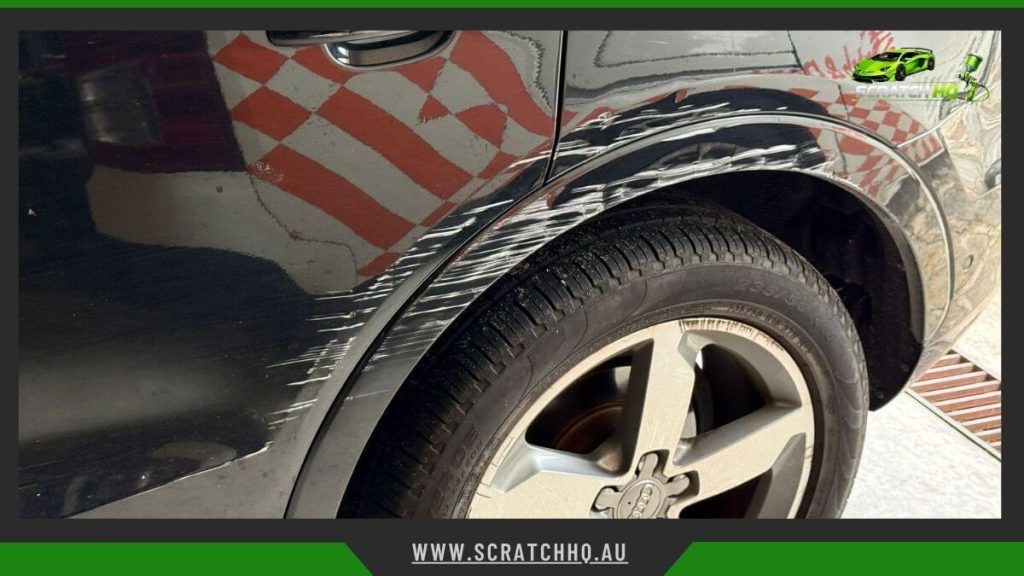
    Wheel arch car scratch repair in Sydney by Scratch HQ mobile service
    • Exposed metal can rust
    • Moisture can spread under the paint
    • Repairs become more difficult over time

    If metal is visible, it should be repaired as soon as possible. Understanding why exposed metal rusts over time, as explained by the Association for Materials Protection and Performance, helps explain how quickly corrosion can develop once the protective paint layer is compromised.

    What Results Should You Expect After Repair

    The final result depends on how deep the scratch is and how carefully each step is done.

    DIY repair


    • Reduces the visibility of the scratch
    • Improves protection and prevents rust
    • May still be slightly noticeable up close

    Professional repair


    • Produces a smoother, more even finish.
    • Better color matching and blending.
    • Can closely match the original factory appearance.

    For small scratches, DIY can provide a solid improvement. For more serious or highly visible damage, professional repair typically delivers a more seamless result.

    When to DIY vs Get Professional Repair

    Choosing between DIY and professional repair depends on the size, depth, and visibility of the scratch.

    Quick Decision Matrix

    Small scratch

    DIY is usually enough

    Deep scratch on visible panel

    Professionally recommended

    Exposed metal

    Professional repair strongly recommended

    Long or wide scratches

    Professional recommended

    Quick Guidelines

    DIY is suitable if:


    • The scratch is small and localized
    • The surrounding paint is still in good condition
    • The damage is not in a highly visible area

    Professional repair is recommended if:


    • The scratch is long, wide, or uneven
    • Metal is exposed across a larger section
    • The damage is on visible panels like doors, hood, or side panels
    • You want a cleaner, near factory-level finish

    Repairing Deep Scratches on Car Doors and Panels

    Deep scratches on doors are more noticeable because they are at eye level.

    Flat panels are easier to sand but harder to blend cleanly.

    Curved areas and edges require more control and are harder to repair evenly.

    Temporary Fixes for Deep Scratches

    • Apply touch-up paint
    • Use scratch-filler pens
    • Cover exposed metal to prevent rust

    These are short-term solutions and will not fully restore the paint or prevent long-term damage.

    Cost: DIY vs Professional Repair

    Small scratch

    Low

    Medium

    1–2 hours

    Medium

    Deep scratch

    Medium

    High

    1 day or more

    High

    How Long Does the Full Repair Process Take?

    • Cleaning and prep: 15–30 minutes
    • Sanding: 10–20 minutes
    • Painting: 1–2 hours
    • Drying and curing: several hours

    Common Mistakes to Avoid

    • Skipping sanding
    • Using the wrong paint code
    • Applying thick pain
    • Not allowing proper drying time
    • Trying to polish instead of repair

    How to Prevent Deep Scratches

    • Use clean microfiber cloths
    • Avoid tight parking spaces
    • Keep a distance from obstacles
    • Apply protective coatings

    Final Thoughts: Fixing Deep Car Scratches the Right Way

    Deep scratches require proper preparation, careful paint application, and correct finishing to blend the surface.

    DIY repair works for small damage, but larger or visible scratches often need professional tools for a clean result.

    Fixing it correctly the first time helps avoid more noticeable repairs later.

    Get a fast, no-obligation quote

    Frequently Asked Questions

    A deep scratch goes beyond the clear coat into the paint, primer, or metal.

    If it reaches metal or covers a large area, professional repair is recommended.

    Yes, for small scratches. Larger damage may require repainting.

    Yes. Exposed metal can rust over time.

    Yes. Moisture and dirt can spread the damage.