A deep scratch on your car isn’t just a surface issue. Once the damage cuts through the clear coat, it requires proper repair to restore the paint and protect the panel.
Fixing it properly involves sanding, rebuilding the paint in layers, and sealing the surface so it blends cleanly with the surrounding area. When done right, it not only improves the look but also prevents issues like rust or peeling.
In this guide, you’ll learn how to assess the damage, fix a deep scratch step by step, and when it’s better to leave it to a professional.
Key Takeaways
Quick Answer: How to Fix a Deep Scratch on a Car
A deep car scratch goes beyond the clear coat into the paint, primer, or metal. It requires proper repair with sanding, primer (if needed), touch-up paint, and a clear coat.
Here’s the process:
Clean the area to remove dirt and debris
Lightly sand the scratch to smooth the edges
Apply primer if the scratch reaches primer or metal
Apply touch-up paint in thin layers, allowing each layer to dry
Apply a clear coat to seal and protect the surface
Polish the area to blend it with the surrounding paint
Types of Car Scratches (Quick Comparison)
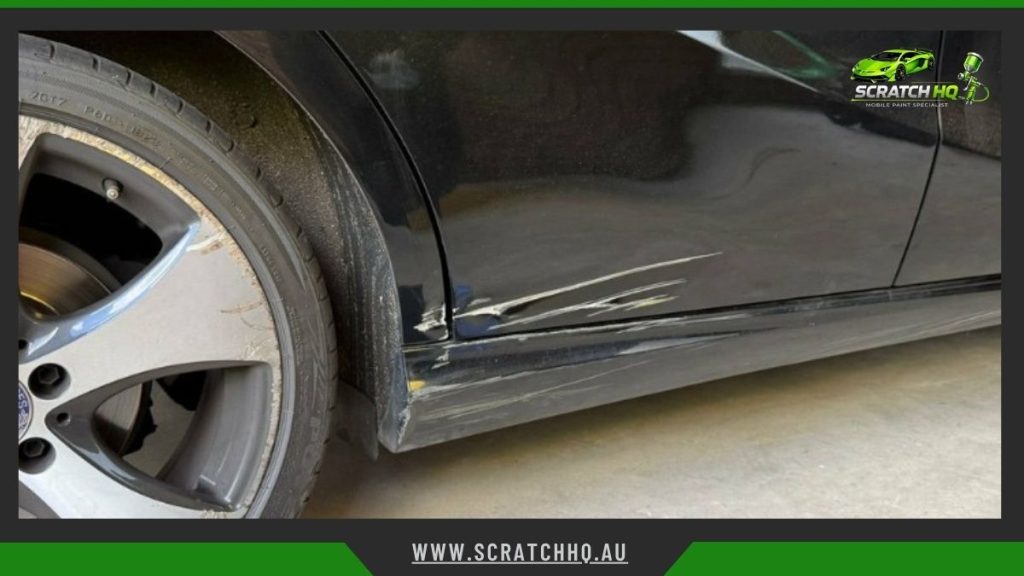
Not all scratches are the same, and each type requires a different level of repair. Identifying the depth helps you choose the right method and avoid making the damage worse.
Understanding the difference is important if you’re trying to figure out how to fix car scratches properly.
surface
Clear coat only
Usually light and barely visible. Do not catch your fingernail. Can be removed with polishing.
Best fix:
Polish or scratch remover
Moderate
Into the paint layer
May be visible under certain lighting. Slightly noticeable texture. Color is still mostly intact.
Best fix:
Light sanding and touch-up paint
Deep
Into primer or metal
Easily felt with your fingernail. May show white, grey, or bare metal. Often uneven and more visible.
Best fix:
Full repair with sanding, primer, paint, clear coat.
Quick Decision Guide
Surface scratches— polish
Moderate scratches— touch-up paint
Deep scratches— full repair
Why this matters
Using the wrong method can make the scratch worse or leave visible marks. Knowing the difference helps you fix it properly the first time.
If you see white, grey, or exposed metal, the scratch is deep. In these cases, using scratch repair services for car paint can help restore your vehicle’s appearance and protection.
What Counts as a Deep Scratch
A deep scratch goes beyond the clear coat into the paint, primer, or metal. These cannot be fixed with polishing and require proper repair to restore the surface and prevent further damage.
Car paint has three main layers:
Clear coat
Base coat
Primer
Metal
Once the scratch goes through the clear coat and into primer or metal, the surface must be rebuilt with paint.
How to Tell If the Scratch Is Deep
You can identify a deep scratch by checking its depth and appearance.
If any of these apply, the scratch requires proper repair, not just surface correction.
Tools and Materials You’ll Need
Using the right materials is important, but understanding what each one actually does helps you avoid common mistakes and achieve a cleaner result.
Quick Toolkit Reference (What Each Tool Actually Does)
Tool | Purpose | Required? | Common mistake |
|---|---|---|---|
Sandpaper (2000–3000 grit) | Smooth surface and level scratch edges | Using the wrong grit (too rough damages paint) | |
Primer | Helps paint stick and prevents rust | Skipping it on bare metal | |
Touch-up paint | Restores color | Using the incorrect paint code | |
Clear coat | Seals and protects the paint | Applying too thickly, causing an uneven finish | |
Microfiber cloth | Cleans surface without scratchinga | Using dirty or rough cloth | |
Polishing compound | Restores shine and blends repair | Over-polishing one area | |
Masking tape | Protects the surrounding paint | Not Masking properly |
How to Find Your Car’s Paint Code
To match the paint correctly, you need your car’s paint code.
You can find it:
Use this code when buying paint. Guessing the color often leads to a visible mismatch.
Step-by-Step: How to Fix a Deep Scratch on a Car
Fixing a deep scratch requires more than polishing, and in some cases, you may need professional car paint repair to achieve a smooth, consistent finish.
Follow these steps carefully:
Clean and Prepare the Area
Wash the area with soap and water to remove dirt and debris. Dry it completely, then use masking tape to protect the surrounding paint.
Smooth the scratch
Lightly sand the scratch using 2000–3000 grit wet sandpaper. Keep the surface wet while sanding to avoid damaging nearby paint. The goal is to smooth sharp edges so the paint can sit evenly.
Apply primer (if needed)
If the scratch reaches primer or bare metal, apply a thin layer of automotive primer. This improves adhesion and prevents rust. Let it dry fully before continuing.
Apply touch-up paint
Use your car’s exact paint code to match the color. Apply paint in thin, even layers. Let each layer dry before adding the next. Build up gradually until slightly level with the surface. Avoid thick application, as it creates uneven texture.
Apply clear coat
Once the color looks even, apply clear coat to seal the repair and restore gloss.
Final sanding and polishing
After the clear coat has fully cured (usually overnight), lightly sand with 3000-grit wet sandpaper to level the surface. Use a polishing compound to restore shine and blend the repair. This step is what makes the repair look natural.
Watch: How to Fix Deep Car Scratches (Step-by-Step)
Watching the process helps you understand how to sand evenly, apply thin paint layers, and blend the repair properly. If you’re unsure about doing it yourself, this will give you a clearer idea of what to expect.
Important Tips for Better Results
Can You Fix a Deep Car Scratch Without Repainting?
You can fix a deep scratch without repainting the entire panel if the damage is small and localized.
It works best when:
For larger or uneven damage, repainting the panel is usually required.
How Long Should Each Layer Dry?
Primer
20–30 minutes
Touch-up paint
20–60 min between layers
Clear coat
Several hours to cure
Applying layers too soon can lead to a soft or uneven finish.
Best Conditions for Repairing a Scratch
Work in a shaded area
Avoid direct sunlight
Avoid humid or wet conditions
Ideal temperature: 15–25°C
Poor conditions can cause uneven drying.
How to Blend the Repair So It Looks Natural
Even with the right color, poor blending will stand out.
What Happens If You Leave a Deep Scratch Unfixed
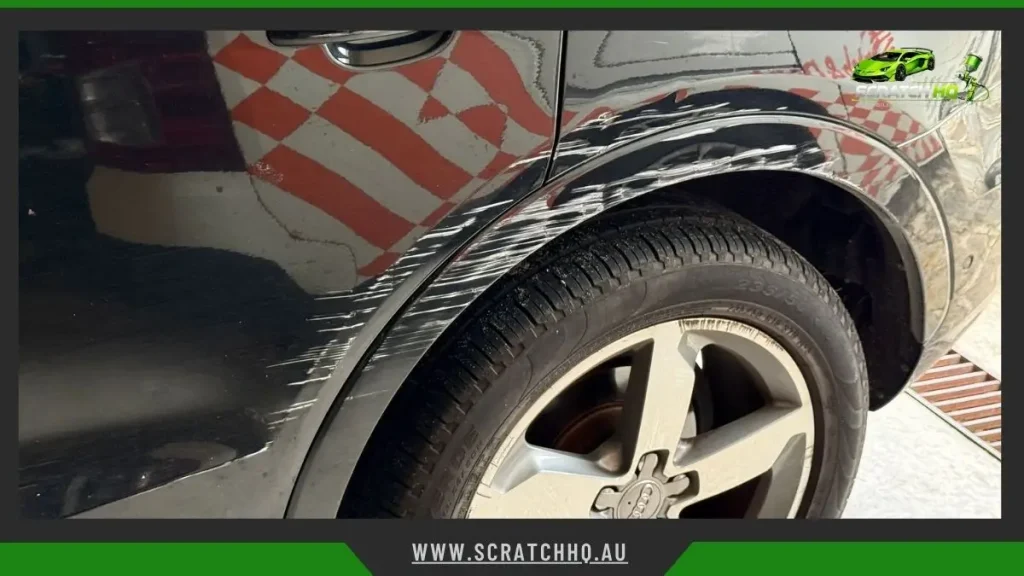
If metal is visible, it should be repaired as soon as possible. Understanding why exposed metal rusts over time, as explained by the Association for Materials Protection and Performance, helps explain how quickly corrosion can develop once the protective paint layer is compromised.
What Results Should You Expect After Repair
The final result depends on how deep the scratch is and how carefully each step is done.
DIY repair
Professional repair
For small scratches, DIY can provide a solid improvement. For more serious or highly visible damage, professional repair typically delivers a more seamless result.
When to DIY vs Get Professional Repair
Choosing between DIY and professional repair depends on the size, depth, and visibility of the scratch.
Quick Decision Matrix
Scenario | DIY | Professional | Recommendation |
|---|---|---|---|
Small scratch | ✔ | – | DIY is usually enough |
Deep scratch on visible panel | ✖ | ✔ | Professionally recommended |
Exposed metal | ✖ | ✔ | Professional repair strongly recommended |
Long or wide scratches | ✖ | ✔ | Professional recommended |
Quick Guidelines
DIY is suitable if:
Professional repair is recommended if:
Repairing Deep Scratches on Car Doors and Panels
Deep scratches on doors are more noticeable because they are at eye level.
Flat panels are easier to sand but harder to blend cleanly.
Curved areas and edges require more control and are harder to repair evenly.
Temporary Fixes for Deep Scratches
These are short-term solutions and will not fully restore the paint or prevent long-term damage.
Cost: DIY vs Professional Repair
Type | DIY Cost | Pro Cost | Time | Finish Quality |
Small scratch | Low | Medium | 1–2 hours | Medium |
Deep scratch | Medium | High | 1 day or more | High |
How Long Does the Full Repair Process Take?
Common Mistakes to Avoid
How to Prevent Deep Scratches
Final Thoughts: Fixing Deep Car Scratches the Right Way
Deep scratches require proper preparation, careful paint application, and correct finishing to blend the surface.
DIY repair works for small damage, but larger or visible scratches often need professional tools for a clean result.
Fixing it correctly the first time helps avoid more noticeable repairs later.
Get a Clean, Professional Finish Without the Guesswork
If you want a smooth, consistent result without uneven paint or visible lines, getting it repaired properly the first time makes all the difference.
ScratchHQ provides mobile car scratch repair services across Sydney and surrounding areas, fixing dents, scratches, and paint damage at your home or workplace.